How Much Room Should an Outdoor Dining Table Have?
Allow about 90 cm, or 3 ft, behind each chair when someone is seated. For a comfortable everyday layout, leave roughly 1 m, or 3 ft 3 in, between the table edge and a wall, fence, planter, or another piece of furniture. That space gives a person room to sit down, lean back, and stand up without shuffling the chair. Tighter spacing can work for occasional meals, but it feels cramped for regular outdoor dining.
The right amount depends on how the table is used. A small breakfast setting can sit closer to a boundary than a table used for long dinners or weekend gatherings. The shape of the table, the size of the chairs, and the route people use to reach the seats all matter. A patio may look generous in a photograph and still feel awkward once every chair is pulled out.
Start with the chairs, not the table
Most people measure the table first, then try to fit seating around it. A better approach is to picture the dining chair in use. A seated person needs space for the chair itself, plus room behind it for knees, elbows, and the small backward movement that happens when someone gets up. If the chair has arms, the clearance needs to account for the full outside width, not just the seat pad.
A useful mental picture is a rectangle around each place setting. The front edge sits at the table. The back edge extends behind the chair. When that rectangle overlaps a wall, a railing, a grill, or a planted border, the seat becomes awkward. People may still sit there, but they will tuck in, twist sideways, or ask someone to move. In outdoor settings, cushions and heavier frames can make that rectangle larger than expected.
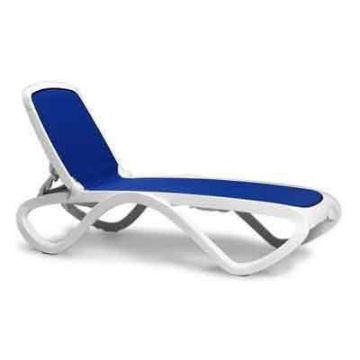
Slender patio dining chairs help a layout breathe. Resin seating with a simple profile can be placed closer together than bulky padded styles, though comfort still depends on the space behind each seat. Bench seating changes the calculation too. A bench can sit closer to a wall at the back, because there is no separate chair to pull out, but people still need enough room at the table edge to sit and stand with ease.
Measure the space around the table
Measure the clear area, not just the distance between walls. Patio doors, steps, outdoor rugs, planters, and umbrellas can all narrow the usable zone. An umbrella base, for example, may be under the table, but its stand can interfere with chairs or legs. A nearby grill may be fine when closed and cramped when someone is standing in front of it.
For a rectangular table, check the long sides and the ends separately. The long sides usually need the most attention because they hold more seats. Ends can be tighter if they are used less often, though a host may still want easy access to serve food. For a round table, walk around the full circumference in your mind. The curve can make chairs angle outward, so the pattern needs more room than the table diameter alone suggests.
A practical way to judge the fit is to place chairs in their normal positions, then pull one out as if someone were sitting down. If it catches on another chair, bumps into a planter, or blocks the path to the house, the layout needs more space or fewer seats. This kind of check does not require special tools. It simply turns an abstract measurement into the movement people make at a real meal.
Where the furniture sits on an uneven patio, small shifts can close a gap that looked fine on paper. Keep that in mind when setting outdoor resin furniture near steps, curb edges, or raised paving. A chair that clears a low wall on level ground may scrape or wobble once it is moved a few inches.
How much space between chairs?
Side by side, chairs need enough gap for elbows and for a plate to be placed without collision. A tight arrangement may be acceptable for drinks and snacks. For a full meal, leave a little breathing room between neighboring seats. The exact gap depends on chair width and table length, but the goal is simple: each diner should be able to eat without bumping the person beside them.
At a dining table with fixed seats, count the places rather than forcing in one extra chair. An overcrowded setting often makes the whole meal feel slower, because people need to move to let someone in or out. If the table is sometimes used by a larger group, consider seating that can be added only on those days, then stored away when not needed.
Chair height also changes comfort. Standard dining sets are designed around a table that works with regular dining chairs. Counter height sets sit taller, so the seating and table need to match. Mixing heights can leave people perched too high or folded too low, which becomes uncomfortable over a long meal. Before buying extra seats, compare the seat height with the underside of the table and the distance between legs.
Leave a route through the dining area
Clearance around a table is not only about the chairs. People also need a way to reach the table carrying plates, drinks, and serving dishes. A route of roughly 90 cm is often more useful than a decorative gap that looks open but cannot carry traffic. If the dining area sits between a kitchen door and a garden path, keep that line as clear as possible.
Watch the corners. Corners are where pulled out chairs, table ends, and foot traffic compete for the same patch of paving. A chair placed diagonally at a corner can look charming and still block the route. Moving it a little inward may help, but only if the seated person still has support and space. Sometimes the answer is a smaller table or fewer chairs, not a clever angle.
Outdoor entertaining often adds loose items: a cooler, a serving table, a stroller, a pet bed, or a stack of cushions. These items may be temporary, yet they use the same floor space as dining chairs. A layout that works only when nothing else is present will feel tight as soon as people arrive. If the patio has room, keep a small side zone for bits and pieces so the dining area stays clear.
Round, rectangular, and expandable tables
Round tables make conversation easy and remove sharp corners from a busy walking area. They also require careful spacing because chairs radiate outward. A round table that fits its diameter into a small space may still leave too little room for the chair backs. Check the full footprint with chairs in place, then add the clearance behind them.
Rectangular tables suit longer patios and can seat more people along the sides. They are easier to push close to a wall when only one side is used for seating. If one long side stays against a wall, the opposite side still needs room for chairs and movement. A bench on the wall side can save space, though it should not be so deep that diners sit too far from the tabletop.
Expandable tables add flexibility, but the saved space only exists before they are opened. Measure the larger size before choosing chairs and nearby pieces. An extendable table may fit the patio beautifully in its compact form and become cramped once the extra leaves are in place. The same applies to folding tables that are brought out for guests. Plan for the busiest version of the setting.
A simple way to check the fit
Before settling on a layout, mark the table footprint and chair positions on the ground with tape or string. Sit in each place for a moment if the furniture is already available. Reach for a plate, push the chair back slightly, and stand up. Notice whether the movement feels natural. Any spot that requires a sideways shuffle is likely to be the seat people avoid.
Then look beyond the table. Check the path from the house, the space near steps, and the area where people will stand to serve food. Make sure chairs do not block drainage grates or create a trip point in dim light. If the table sits near a boundary, leave enough room for cleaning and for plants to grow without pressing against the backs of seats.
A good dining layout is rarely the one with the maximum number of chairs. It is the one where people can sit, eat, and move without noticing the furniture getting in the way. Give each seat a comfortable zone, protect the main walking route, and leave a little spare space for the normal mess of outdoor meals. That is usually enough to turn a patio into a place where people want to stay at the table.